8 tips for choosing the right living room rug

Tips for choosing living room rugs are quick to come by from experts and specialists, and they can help you shape your home exactly as you have always wanted it. In the article below you will find everything worth knowing, and plenty of inspiration, so that you too can find the rug you deserve.
Tips for choosing living room rugs

1. Know the size of your living room
Only when you really know how much floor space you have – or rather, how much of it the rug should actually cover – can you order the right size. Buying on a whim is not advisable here, since every extra square metre costs more and usually will not fit anywhere else in the house if you end up with too much.
So measure your living room precisely and do not forget any area you want included in the size. A floor plan of the house helps with the measuring, as does checking it yourself with a folding rule. Better to check once too often than to end up with too much on the invoice because of an imprecise plan.
2. How much traffic your living room gets
A decisive factor in choosing the rug is how much traffic your living room gets. By that we mean you need to think about how heavily it will be used in future. Are there children playing and sliding about on the floor?
Does someone in the household use a walking aid, or depend on a wheelchair? Are there pets – a dog or a cat – that will also walk across the rug often and happily? In short, these points bring the question into focus. Depending on how your own assessment turns out, the rug's surface should be chosen to match.
3. Choose the rug to suit the shape of the room
Besides the floor area to be covered, you also need to consider what shape your living room is, and what particular demands that places on your choice of rug. Some living rooms have bay windows or other recesses, which call for a special shape. Round or oval living areas present a particular challenge too.
If your living room departs from a square or rectangular shape, it is worth thinking in advance about which areas should end up covered by the rug. To make choosing and positioning easier, it may be worth leaving some areas out and excluding them from the measurement. Advice from your local dealer helps here too, since not every material suits every shape equally well.
4. Consider the ideal texture
Texture determines how a rug works with a room and with the light and lighting in it. A rug with a texture that has strong visual effects can give a room greater depth and present the viewer with a larger-feeling scene.
Mirror-like effects are possible too, and have a charm of their own. On a rug, texture can also be part of the actual construction and influence or determine it substantially. Choose a texture that suits your room and gives you exactly the atmosphere that raises the comfort factor, while still letting the rug be used properly.
5. Consider a complementary colour
For the rug to fit the room perfectly, the colour has to work – with the other colours in the room, with the colours of the furniture in it, and with the wall colours. If you prefer a unified play of colour, you can stay within the same tones. If you want a clear separation, a strong contrast works well, setting the rug distinctly apart from every other colour in the living room.
So that this contrast does not turn out too strong, though, a second colour can be worked into the rug. That softens it, and the colours can harmonise with their surroundings, which suits the viewing eye and produces a gentler effect. A third colour can be quite useful here too, if only across smaller areas.
6. Choose a pattern that suits the room
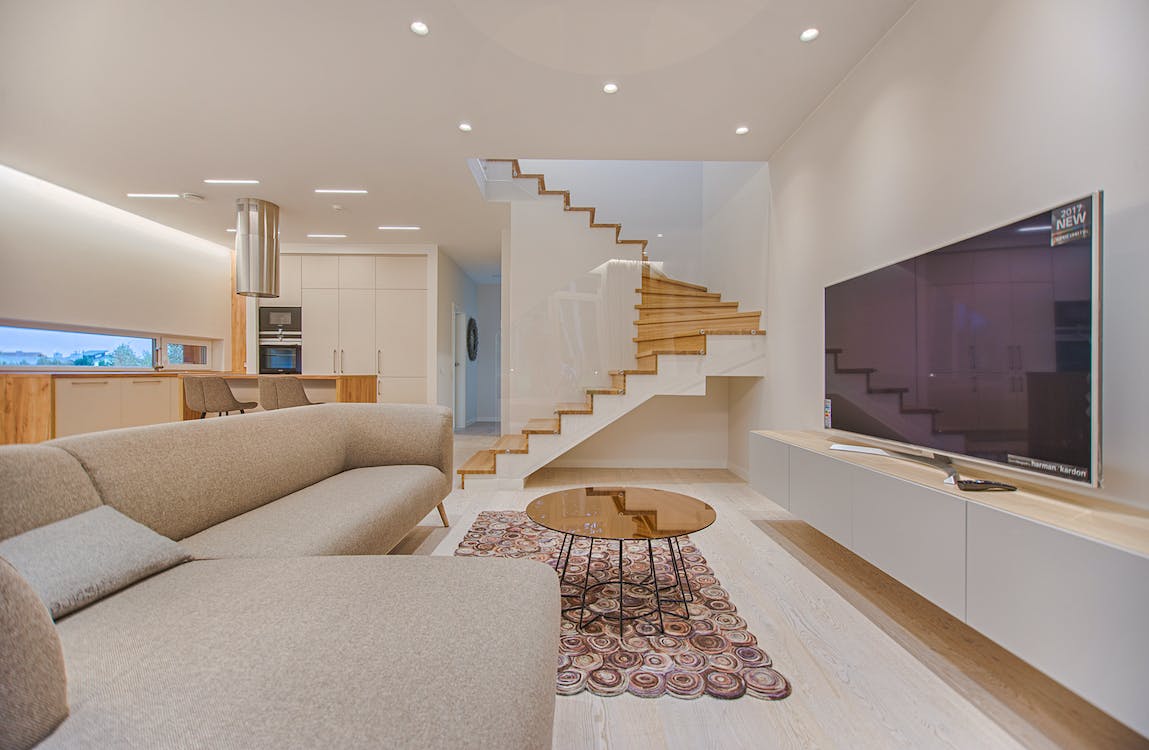
Opinions differ on this question – the classic check, a chequerboard layout, stripes or an entirely different kind of pattern are all open to you. The pattern should always suit the choice of colour, though, and should not challenge its surroundings too much. The surface structure, which follows from the traffic the room gets, should be considered as well. The pattern is therefore the aspect that has to be brought into line with almost every other point, and that takes its lead from them. Going without a pattern is possible too, if you are after a calm, even appearance.
7. The ideal size for your living room matters too
The last point looks at whether the living room should be covered by a rug completely or only in part. Here you can take a minimalist approach, covering only the area around the sofas or the coffee table, for example. A maximal approach, covering the whole living area, has its advocates too. This question always has an individual answer and can only be settled case by case, according to the buyer's wishes. It is also worth thinking about how the living room will be cleaned in future, and what you want to use to do it. Leaving some areas clear can help, or may make additional cleaning tools and products necessary.
8. Match the rug to the room's lighting
The lighting in your living room plays a decisive part in choosing the right rug. Consider how daylight falls into the room and how the artificial lighting is arranged. A rug with a pale texture can help brighten the room, while dark rugs can create a cosy atmosphere. Think about how the light will affect the colours and the texture of the rug, to make sure it fits your living room properly and creates the mood you want.
In conclusion
When the long, cold winter draws in, you want to make yourself comfortable within your own four walls and feel genuinely at home exactly where you spend time as a couple or as a family. Choosing a floor covering that goes with you at every step is naturally part of that. If you keep the points named here in mind and follow the tips listed, you will get it right and find the rug that suits your home best. When in doubt, the experts locally, or a consultation, will gladly help you.
FAQ:
Where should the rug be placed in the living room: under the sofa or in front of it?
Whether the rug should sit under the sofa or in front of it depends on your design preferences. A rug under the sofa can make the room look larger and create a cohesive appearance. If you prefer to place the rug in front of the sofa, that creates a cosy atmosphere and emphasises the sofa as the central element. Choose the option that best suits your living room layout and your personal style.
How do I position the rug correctly in the living room?
To position a rug correctly in the living room, measure your space carefully and take into account the position of furniture such as the sofa, coffee table and armchairs. A common approach is to place the rug so that it reaches the front legs of the furniture, creating a harmonious connection. Remember to match the rug's colours and pattern to your room scheme, to achieve a balanced appearance.
Is it advisable for the sofa and rug to be the same colour?
It is not strictly necessary for the sofa and rug to be the same colour, but they should harmonise well. One option is to choose sofa and rug in similar shades, to create a coherent room scheme. On the other hand, a contrasting rug can set a visual accent and make the design more interesting. Bear in mind, though, that the colours in your living room should work well together overall, to ensure a harmonious whole.